· Hamza · Artificial Intelligence · 4 min read
What Is Artificial Intelligence? A Complete Beginner's Guide (2026)
Learn what Artificial Intelligence (AI) is, how it works, its types, real-world applications, benefits, challenges, and why it is transforming every industry.
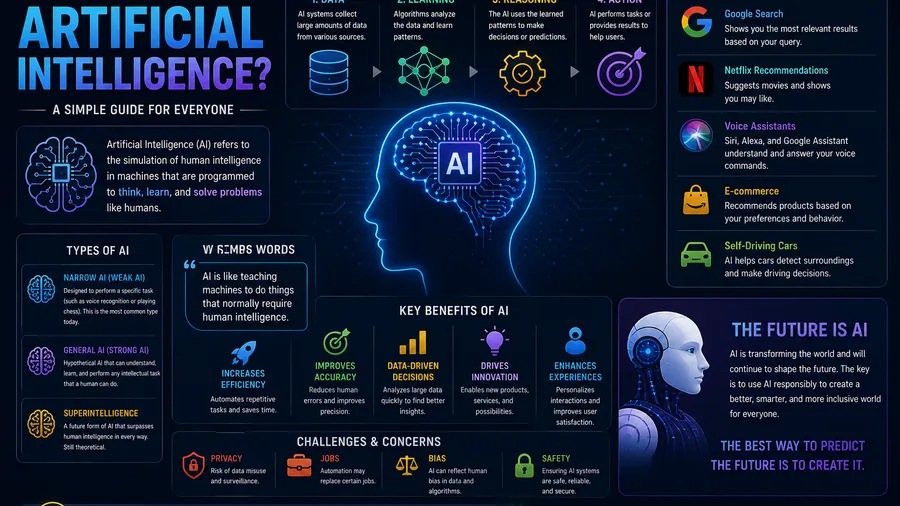
What Is Artificial Intelligence? A Complete Beginner’s Guide (2026)
Artificial Intelligence (AI) is one of the most important technologies of the modern era. From virtual assistants and self-driving cars to chatbots and medical diagnostics, AI is transforming how people live and work.
In this guide, you’ll learn what Artificial Intelligence is, how it works, the different types of AI, its real-world applications, advantages, challenges, and what the future may hold.
What Is Artificial Intelligence?
Artificial Intelligence (AI) is the ability of computer systems to perform tasks that normally require human intelligence.
These tasks include:
- Learning
- Problem-solving
- Understanding language
- Recognizing images
- Making decisions
- Predicting outcomes
Instead of following only fixed instructions, AI systems can analyze data, recognize patterns, and improve their performance over time.
How Does AI Work?
AI works by combining algorithms, large amounts of data, and computing power.
A typical AI system follows these steps:
- Collect data.
- Analyze patterns.
- Learn from examples.
- Make predictions or decisions.
- Improve based on new information.
The more high-quality data an AI model receives, the better its performance becomes.
Types of Artificial Intelligence
AI is generally divided into three categories.
Narrow AI
Also called Weak AI, Narrow AI is designed to perform a specific task.
Examples include:
- ChatGPT
- Google Translate
- Siri
- Alexa
- Recommendation systems
This is the type of AI used in most applications today.
General AI
General AI refers to machines capable of performing any intellectual task a human can do.
Unlike Narrow AI, General AI would be able to learn and adapt across many different domains.
General AI has not yet been achieved.
Super AI
Super AI is a theoretical concept where machines surpass human intelligence in every field.
While widely discussed, Super AI remains speculative and does not currently exist.
Machine Learning
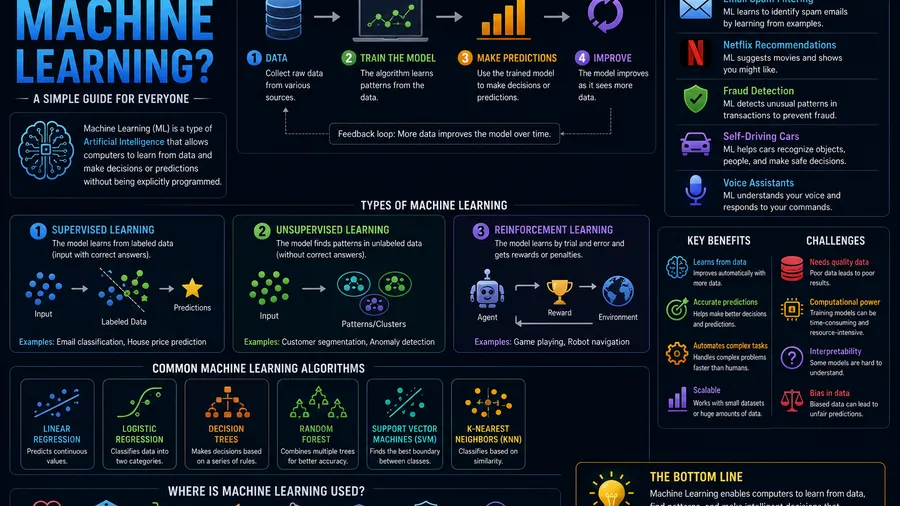
Machine Learning (ML) is a branch of AI that enables computers to learn from data without being explicitly programmed for every task.
Machine learning powers many everyday technologies, including:
- Spam filters
- Product recommendations
- Fraud detection
- Voice recognition
- Search engines
It is one of the most important technologies behind modern AI systems.
Deep Learning
Deep Learning is a specialized area of Machine Learning that uses artificial neural networks inspired by the human brain.
Deep learning is responsible for major advances in:
- Image recognition
- Speech recognition
- Language translation
- Autonomous vehicles
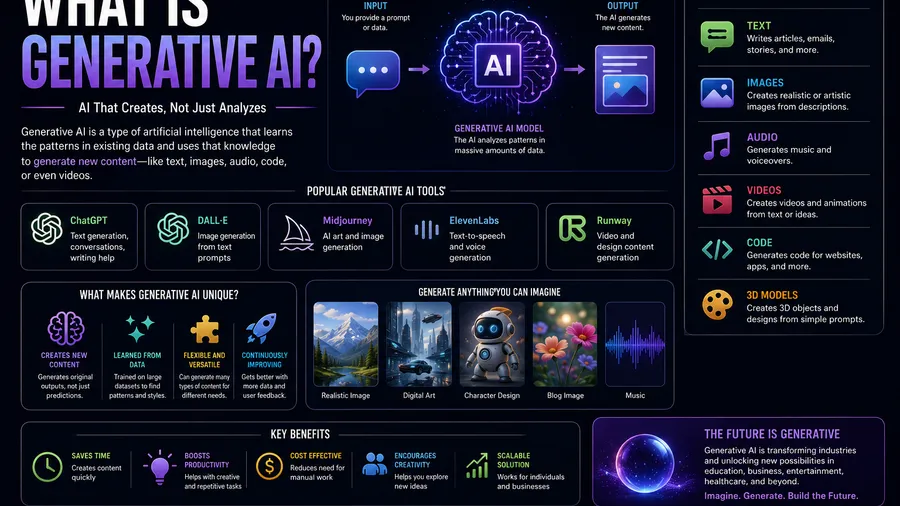
- Generative AI
Large AI models such as ChatGPT rely on deep learning techniques.
Real-World Applications of AI
Artificial Intelligence is used across many industries.
Examples include:
- Healthcare
- Education
- Finance
- Manufacturing
- Transportation
- Retail
- Marketing
- Customer support
- Cybersecurity
- Software development
AI continues to expand into new areas every year.
Advantages of Artificial Intelligence
AI offers numerous benefits.
These include:
- Faster decision-making
- Increased productivity
- Automation of repetitive tasks
- Improved accuracy
- Better customer experiences
- 24/7 availability
- Data-driven insights
- Reduced operational costs
Businesses increasingly use AI to improve efficiency and innovation.
Challenges of AI
Despite its advantages, AI also presents challenges.
Some common concerns include:
- Data privacy
- Security risks
- Bias in AI models
- High development costs
- Job displacement through automation
- Ethical considerations
Responsible development and regulation are important for addressing these issues.
AI in Everyday Life
Many people use AI every day without realizing it.
Examples include:
- Google Search
- ChatGPT
- Netflix recommendations
- YouTube suggestions
- Google Maps
- Voice assistants
- Email spam filters
- Online shopping recommendations
AI has become a core part of modern digital experiences.
Popular AI Tools
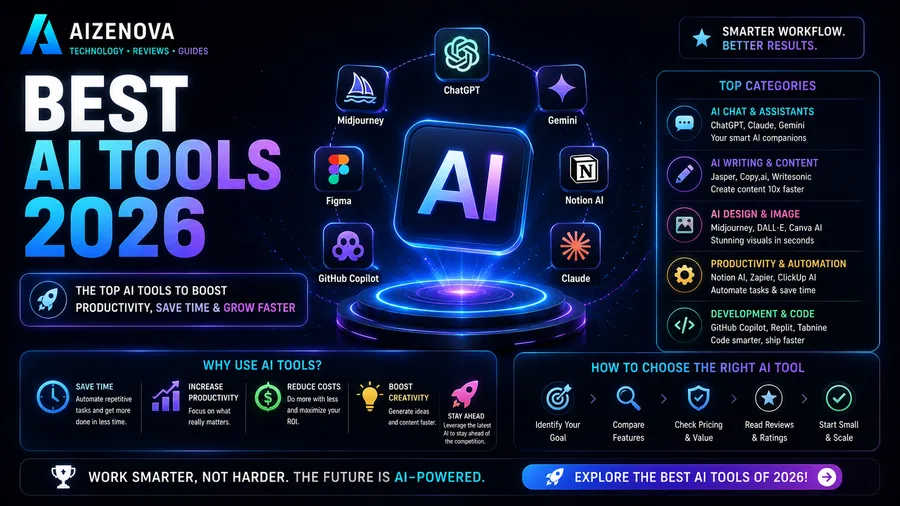
Some of the most widely used AI tools include:
- ChatGPT
- Google Gemini
- Claude
- Microsoft Copilot
- Perplexity AI
- Midjourney
- DALL·E
- GitHub Copilot
These tools help users write, code, create images, analyze data, and improve productivity.
Is AI Replacing Humans?
AI is changing how people work, but it is not replacing every job.
Instead, AI often assists humans by:
- Automating repetitive tasks
- Improving decision-making
- Increasing efficiency
- Supporting creativity
- Enhancing productivity
Many future jobs are expected to involve collaboration between humans and AI systems.
The Future of Artificial Intelligence
AI is expected to continue advancing rapidly.
Future developments may include:
- More intelligent assistants
- Improved healthcare diagnostics
- Smarter robots
- Personalized education
- More capable autonomous vehicles
- Faster scientific discoveries
As AI evolves, it will likely become an even more significant part of daily life and business.
Frequently Asked Questions
What does AI stand for?
AI stands for Artificial Intelligence.
Is AI the same as Machine Learning?
No. Machine Learning is a branch of Artificial Intelligence that enables computers to learn from data.
Where is AI used?
AI is used in healthcare, finance, education, transportation, marketing, customer service, cybersecurity, manufacturing, and many other industries.
Can beginners learn AI?
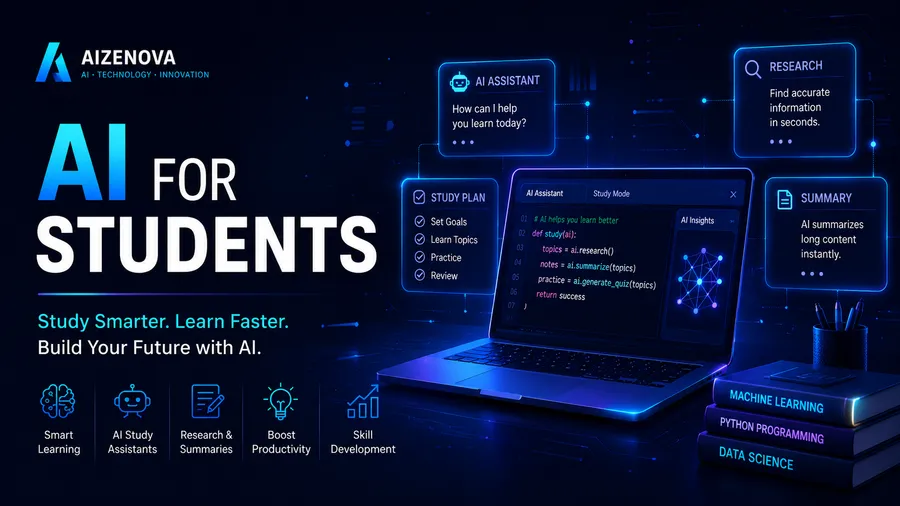
Yes. Many online courses, tutorials, and open-source tools make it easier than ever for beginners to start learning Artificial Intelligence.
Is Artificial Intelligence the future?
AI is expected to remain one of the fastest-growing technologies, with increasing adoption across nearly every industry.
Conclusion
Artificial Intelligence is transforming the world by enabling computers to perform tasks that once required human intelligence. From healthcare and education to business and software development, AI is improving efficiency, solving complex problems, and creating new opportunities for innovation.
Understanding the fundamentals of AI is becoming an essential skill in today’s digital world. Whether you’re a student, developer, entrepreneur, or technology enthusiast, learning about Artificial Intelligence will help you prepare for the future.