· AIZENOVA · Artificial Intelligence · 18 min read
AI for Students: The Complete Guide to Learning, Studying, and Succeeding with Artificial Intelligence (2026)
Discover how students can use AI to study smarter, improve productivity, write better assignments, learn programming, prepare for exams, and avoid common mistakes. Explore the best AI tools and practical strategies for academic success in 2026.
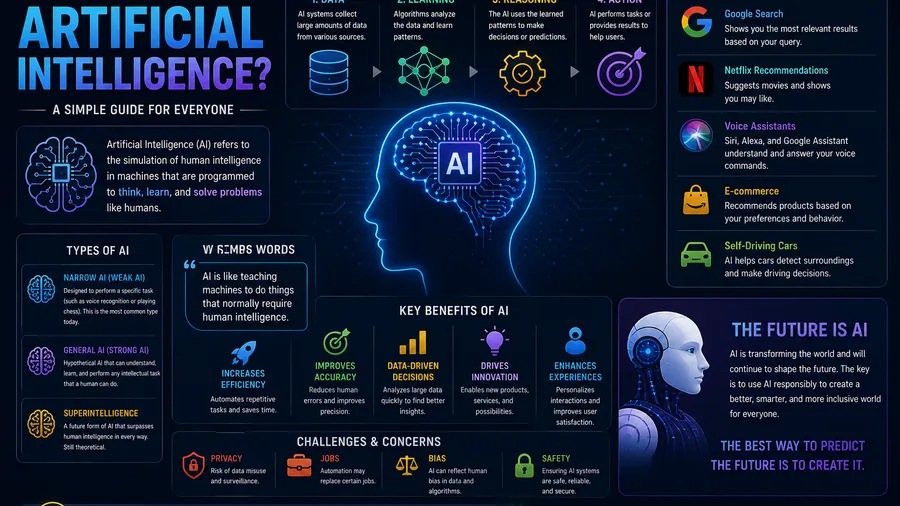
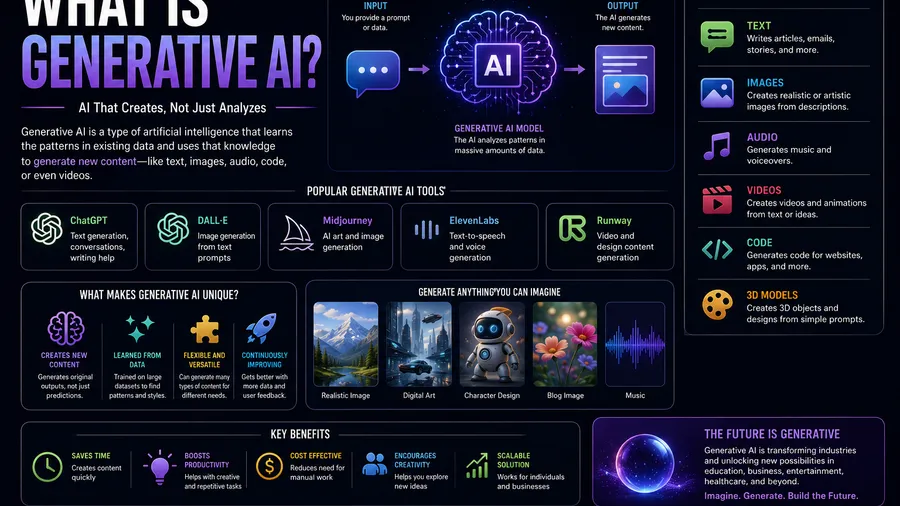
Artificial Intelligence is changing the way students learn, research, write assignments, and prepare for exams. What once required hours of searching through textbooks and websites can now be completed much faster with the help of modern AI tools.
However, using AI effectively is not about letting it do all the work. The most successful students use AI as a learning assistant—not as a shortcut. When used responsibly, AI can explain difficult concepts, generate study plans, improve writing, summarize long documents, and help students become more productive.
Whether you’re in high school, college, or university, understanding how to use AI correctly can save time, reduce stress, and improve academic performance.
In this comprehensive guide, you’ll discover how AI is transforming education, the best AI tools for students in 2026, practical study techniques, common mistakes to avoid, and strategies for using AI responsibly while continuing to develop your own skills.
Quick Summary
| Difficulty | ⭐☆☆☆☆ Beginner |
| Reading Time | 16 Minutes |
| Category | Artificial Intelligence |
| Best For | High School Students, College Students, University Students |
| Learning Impact | Very High |
| Last Updated | August 5, 2026 |
Definition
AI for Students refers to the use of artificial intelligence tools to improve learning, research, productivity, organization, writing, and problem-solving while supporting—not replacing—the learning process.
Table of Contents
- What Is AI for Students?
- Why Students Are Using AI
- Benefits of AI in Education
- Best AI Tools for Students
- AI for Research
- AI for Writing Assignments
- AI for Studying
- AI for Programming Students
- AI for Language Learning
- AI for Time Management
- Common Mistakes
- Ethical Use of AI
- Future of AI in Education
- Frequently Asked Questions
- Conclusion
What Is AI for Students?
AI for students is the use of intelligent software to make learning more effective and efficient.
Instead of replacing textbooks, teachers, or personal study, AI complements traditional education by providing instant explanations, personalized recommendations, and interactive learning experiences.
Students can use AI to:
- Understand complex topics
- Summarize lengthy articles
- Generate practice questions
- Improve essays
- Learn programming
- Organize study schedules
- Translate educational material
- Brainstorm project ideas
- Review grammar and writing
- Prepare for exams
Rather than spending hours searching for information across multiple websites, students can receive structured explanations in seconds.
This allows them to spend more time understanding concepts instead of simply collecting information.
Why AI Is Transforming Education
Education has always evolved alongside technology.
From printed books to computers and online learning platforms, each innovation has changed how students access knowledge.
Artificial intelligence represents the next major step.
Instead of providing the same learning experience to everyone, AI can adapt explanations based on a student’s level, learning style, and goals.
For example:
A beginner learning Python may need simple explanations with basic examples.
An advanced student may prefer deeper technical discussions and real-world coding challenges.
AI makes this level of personalization possible.
Why Students Are Using AI
Millions of students now use AI every day because it helps them study more efficiently without replacing independent learning.
Some of the biggest reasons include:
- Faster research
- Better note organization
- Improved writing
- Personalized explanations
- Interactive learning
- Practice quizzes
- Exam preparation
- Coding assistance
- Language learning
- Productivity improvement
When used responsibly, AI becomes a powerful educational assistant rather than a replacement for teachers or textbooks.
💡 Student Insight
The goal of AI is not to think for you. Its greatest value comes from helping you understand difficult concepts faster so you can build your own knowledge and confidence.
Benefits of AI in Education
Artificial intelligence offers many practical advantages that help students become more productive learners.
Below are some of the most important benefits.
Faster Learning
Instead of reading dozens of articles to understand one concept, students can ask AI for clear explanations tailored to their current knowledge level.
If a topic remains confusing, AI can explain it again using different examples until it becomes easier to understand.
This personalized approach helps many students learn more efficiently.
Better Understanding of Complex Topics
Subjects such as mathematics, programming, economics, chemistry, and physics often contain concepts that require step-by-step explanations.
AI can simplify difficult material by breaking it into smaller sections and providing practical examples.
Rather than memorizing information, students can focus on understanding how ideas connect.
Improved Productivity
Students spend significant time organizing notes, planning assignments, and preparing for exams.
AI helps automate many of these activities by assisting with:
- Study schedules
- Note summaries
- Flashcards
- To-do lists
- Assignment planning
- Revision checklists
Better organization often leads to better academic performance.
Personalized Learning
Every student learns differently.
Some prefer visual explanations.
Others learn through practical examples or detailed written descriptions.
AI allows students to request explanations in different formats until they find the one that works best for them.
This flexibility makes learning more engaging.
Increased Confidence
Many students hesitate to ask questions during class because they worry about making mistakes.
AI provides a judgment-free environment where students can ask unlimited questions at any time.
This encourages curiosity and continuous learning.
Real-Life Example
Imagine you’re preparing for a biology exam.
Instead of reading an entire textbook chapter multiple times, you could ask AI to:
- Summarize the chapter
- Explain difficult concepts
- Create practice quizzes
- Generate flashcards
- Ask exam-style questions
- Identify common mistakes
You would still study the material yourself—but with a much more organized and efficient approach.
💡 Pro Tip
Students who use AI to understand information generally learn more effectively than students who simply copy AI-generated answers. Treat AI as your personal tutor, not your substitute.
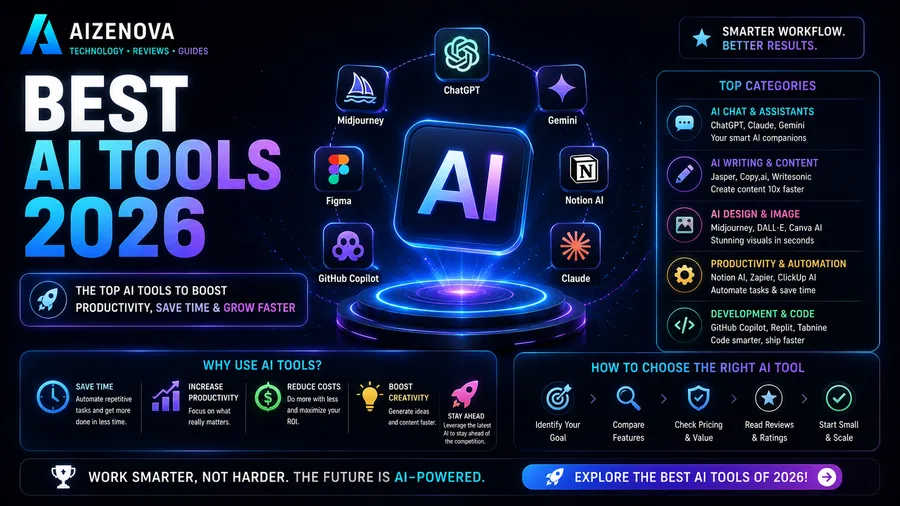
Best AI Tools for Students in 2026
Choosing the right AI tool depends on what you’re trying to accomplish.
Some tools are excellent for research, while others specialize in writing, programming, language learning, or note-taking.
Instead of installing dozens of AI applications, start with a few trusted tools that genuinely improve your learning experience.
Below are some of the most useful AI tools for students in 2026.
| AI Tool | Best For | Main Strength |
|---|---|---|
| ChatGPT | Learning & Research | Explaining concepts and answering questions |
| Claude | Long Documents | Summarizing and analyzing large texts |
| Gemini | Google Workspace | Research and productivity |
| Microsoft Copilot | Microsoft 365 | Writing and Office tasks |
| Perplexity AI | Academic Research | Finding information with cited sources |
| Notion AI | Organization | Notes and study planning |
| Grammarly | Writing | Grammar and style improvement |
| Canva AI | Presentations | Creating visual projects |
| GitHub Copilot | Programming Students | Coding assistance |
| Quizlet AI | Revision | Flashcards and practice quizzes |
Every student has different needs.
The best strategy is to master one or two AI tools before exploring additional platforms.
Which AI Tool Should You Choose?
| Your Goal | Recommended Tool |
|---|---|
| Understand difficult topics | ChatGPT |
| Research with sources | Perplexity AI |
| Improve essays | Grammarly |
| Organize notes | Notion AI |
| Create presentations | Canva AI |
| Learn programming | GitHub Copilot |
| Analyze long PDFs | Claude |
| Study with Google apps | Gemini |
Remember that no AI tool is perfect.
Using multiple trusted resources often produces the best learning outcomes.
💡 Student Insight
The best AI tool is not necessarily the most advanced one—it’s the one that helps you understand your coursework more effectively.
AI for Research
Research is one of the areas where AI can save students the most time.
Instead of opening dozens of browser tabs, AI helps organize information, explain unfamiliar concepts, and identify useful resources more efficiently.
However, AI should support your research—not replace critical thinking.
Finding Reliable Information
AI can help you quickly understand unfamiliar topics before exploring more detailed academic resources.
For example, you might ask AI to explain:
- Climate change
- Quantum computing
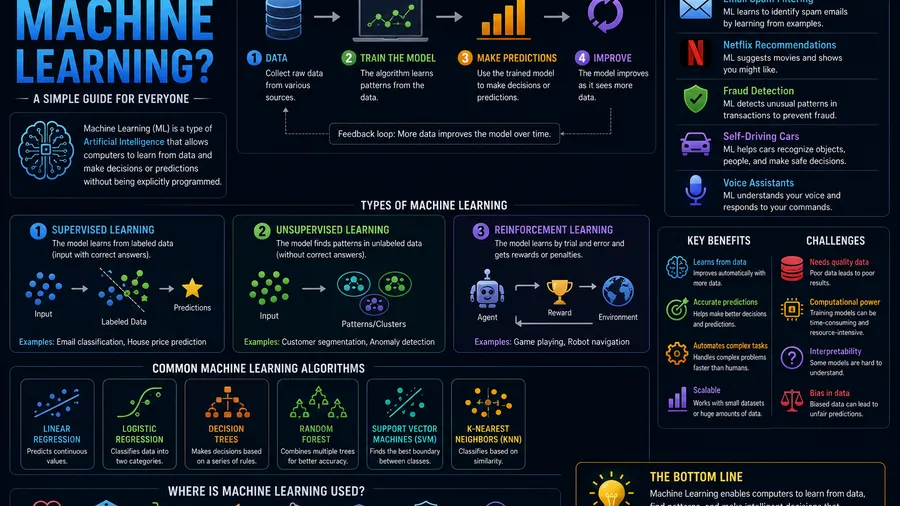
- Machine learning
- World War II
- Human anatomy
- Economic inflation
Once you understand the basics, you can move on to textbooks, academic journals, and trusted publications.
This combination often produces much better research than relying on a single source.
Summarizing Long Documents
Reading long academic papers can be challenging.
AI helps by summarizing:
- Research papers
- Textbook chapters
- Scientific articles
- Reports
- White papers
A summary should never replace reading the original source when writing important assignments, but it can help you identify the most relevant sections much faster.
Brainstorming Ideas
Sometimes the hardest part of an assignment is deciding where to begin.
AI can suggest:
- Research questions
- Project ideas
- Essay topics
- Presentation structures
- Discussion points
These suggestions help students overcome writer’s block and start their work more confidently.
Organizing Information
AI also helps organize research into logical sections.
For example, instead of keeping dozens of random notes, you can group information into categories such as:
- Introduction
- Background
- Main Arguments
- Evidence
- Case Studies
- Conclusion
A clear structure makes writing significantly easier.
⚠️ Important
Always verify important information using reliable academic sources. AI can occasionally provide outdated or inaccurate information, so independent verification remains essential.
AI for Writing Assignments
Writing is one of the most popular ways students use artificial intelligence.
Used responsibly, AI can improve writing quality while helping students develop stronger communication skills.
Generating First Drafts
Starting a blank page is often the most difficult part of writing.
AI can generate an initial draft that helps students organize their thoughts.
However, the draft should always be rewritten, expanded, and personalized.
Your assignment should reflect your own understanding—not simply AI-generated text.
Improving Grammar
Even excellent ideas can lose marks because of grammar mistakes.
AI writing assistants help students improve:
- Grammar
- Spelling
- Sentence structure
- Word choice
- Clarity
- Readability
These improvements make assignments easier for teachers to read and understand.
Creating Better Outlines
A strong outline often leads to a stronger assignment.
AI can recommend structures for:
- Essays
- Reports
- Presentations
- Research papers
- Case studies
Once the outline is ready, students can focus on developing each section using their own knowledge and research.
Rewriting for Clarity
Sometimes students understand a topic but struggle to explain it clearly.
AI can rewrite confusing paragraphs while preserving the original meaning.
This is especially useful for non-native English speakers who want to improve academic writing.
Avoiding Plagiarism
One of the biggest misconceptions is that AI automatically prevents plagiarism.
It does not.
Students remain responsible for producing original work, citing sources correctly, and following their school’s academic integrity policies.
Think of AI as an editor—not a shortcut.
AI for Studying
Studying becomes much more effective when learning is active rather than passive.
Instead of repeatedly reading the same notes, AI helps students interact with information in different ways.
Creating Practice Questions
One of the best ways to prepare for exams is by testing yourself.
AI can generate:
- Multiple-choice questions
- Short-answer questions
- True or false quizzes
- Essay prompts
- Scenario-based questions
Testing yourself regularly improves memory and identifies weak areas.
Building Flashcards
Flashcards remain one of the most effective study techniques.
AI can quickly generate flashcards for almost any subject.
Examples include:
- Biology terminology
- Programming syntax
- Historical events
- Mathematical formulas
- Vocabulary
- Medical definitions
Reviewing flashcards consistently helps strengthen long-term memory.
Personalized Study Plans
Every student has different strengths and weaknesses.
AI can create study schedules based on:
- Exam dates
- Available study time
- Subject difficulty
- Learning goals
- Weekly timetable
Having a realistic study plan reduces stress and improves consistency.
Explaining Mistakes
One of AI’s greatest strengths is explaining why an answer is wrong.
Instead of simply showing the correct answer, AI can guide students through the reasoning process.
This approach develops deeper understanding rather than memorization.
Active Learning vs Passive Learning
| Passive Learning | Active Learning with AI |
|---|---|
| Reading notes repeatedly | Asking AI to explain concepts |
| Memorizing facts | Solving practice problems |
| Highlighting textbooks | Creating quizzes and flashcards |
| Watching videos without interaction | Asking follow-up questions |
| Copying information | Teaching concepts back using AI feedback |
Students who actively engage with information generally retain knowledge longer and perform better during exams.
💡 Pro Tip
Instead of asking AI for the final answer, ask it to guide you through the solution step by step. You’ll develop stronger problem-solving skills while gaining a deeper understanding of the subject.
AI for Programming Students
Programming is one of the fields where artificial intelligence can provide enormous educational value.
Instead of spending hours searching through documentation or forums, students can use AI to understand programming concepts, debug code, and practice solving problems.
However, the goal should never be to let AI write every line of code.
The best programmers use AI to learn faster—not to avoid learning.
Learning New Programming Languages
Whether you’re studying:
- Python
- JavaScript
- Java
- C++
- C#
- Go
- Rust
- PHP
AI can explain syntax, compare languages, and generate beginner-friendly examples.
For instance, if you’re learning Python loops, AI can provide simple examples before gradually introducing more advanced concepts.
Learning step by step helps build stronger programming foundations.
Understanding Errors
Error messages are often frustrating for beginners.
Instead of simply fixing the code automatically, AI can explain:
- Why the error occurred
- Which line caused the issue
- How to fix it
- How to avoid similar mistakes in the future
Understanding mistakes is far more valuable than copying corrected code.
Explaining Algorithms
Algorithms can seem intimidating when first encountered.
AI can explain concepts such as:
- Binary Search
- Sorting Algorithms
- Recursion
- Dynamic Programming
- Linked Lists
- Trees
- Graphs
It can also provide visual explanations, analogies, and progressively more advanced examples depending on your skill level.
Code Reviews
Students can ask AI to review their own code and suggest improvements.
Useful feedback may include:
- Better variable names
- Improved readability
- Performance optimization
- Code organization
- Best practices
- Potential bugs
Always try to understand each suggestion before applying it.
Practice Projects
Learning programming requires building projects.
AI can recommend ideas based on your current level.
Examples include:
Beginner
- Calculator
- To-do List
- Number Guessing Game
- Unit Converter
Intermediate
- Weather App
- Expense Tracker
- Blog Website
- Quiz Application
Advanced
- AI Chatbot
- Portfolio Website
- Task Management Platform
- Recommendation System
Projects help transform theoretical knowledge into practical skills.
💡 Programming Tip
If AI generates code for you, don’t stop there. Ask it to explain every function, every loop, and every variable until you understand exactly how the solution works.
AI for Language Learning
Artificial intelligence has become one of the most effective tools for learning new languages.
Unlike traditional textbooks, AI provides interactive conversations, personalized explanations, and instant feedback.
Practicing Conversations
Students can simulate conversations in languages such as:
- English
- Spanish
- French
- German
- Japanese
- Korean
- Arabic
This allows learners to practice speaking and writing even without a language partner.
Grammar Explanations
Instead of memorizing grammar rules, students can ask AI to explain them using simple examples.
AI can also compare similar grammar structures that often confuse learners.
Vocabulary Building
Learning vocabulary becomes easier through repetition and context.
AI can:
- Create vocabulary lists
- Generate example sentences
- Build flashcards
- Create quizzes
- Recommend daily practice exercises
Consistent practice is more effective than memorizing hundreds of words at once.
Pronunciation Support
Many AI-powered language applications now include pronunciation analysis.
Students receive feedback that helps them improve speaking accuracy over time.
AI for Time Management
Many students struggle not because they lack ability, but because they struggle to organize their time.
Artificial intelligence helps students create realistic schedules and maintain consistent study habits.
Building Weekly Study Plans
AI can organize your week based on:
- Class schedule
- Assignment deadlines
- Exam dates
- Free time
- Personal commitments
Having a structured plan reduces stress and prevents last-minute cramming.
Prioritizing Tasks
When multiple assignments are due, AI can help determine what should be completed first based on urgency and estimated effort.
This helps students avoid becoming overwhelmed.
Daily Productivity
AI can recommend productive routines such as:
- Study for 50 minutes
- Take a 10-minute break
- Review notes before sleeping
- Complete difficult subjects first
- Limit distractions during study sessions
Small daily improvements often lead to significant long-term academic success.
AI for Group Projects
Group assignments can be difficult because multiple students contribute different ideas and work styles.
AI helps teams stay organized while improving collaboration.
Organizing Responsibilities
AI can divide a project into logical sections such as:
- Research
- Data Collection
- Writing
- Presentation Design
- Editing
- Final Review
Clear responsibilities reduce confusion and improve teamwork.
Meeting Summaries
After online meetings, AI can summarize:
- Decisions made
- Tasks assigned
- Deadlines
- Next steps
This ensures everyone remains informed.
Presentation Preparation
AI can assist with:
- Slide structure
- Presentation outlines
- Speaker notes
- Visual suggestions
- Practice questions
Students should still personalize their presentations rather than relying entirely on AI-generated content.
A Practical Study Workflow Using AI
One of the biggest mistakes students make is using AI only when they need quick answers.
A better approach is to integrate AI throughout the entire learning process.
Below is a practical workflow that many successful students can follow.
Step 1 — Learn the Topic
Begin by asking AI to explain the subject using simple language.
Request examples if something remains unclear.
Step 2 — Read Trusted Resources
After understanding the basics, study your textbook, lecture notes, or recommended academic materials.
Use AI to clarify—not replace—these resources.
Step 3 — Take Notes
Create your own notes using your own words.
Writing information yourself improves understanding and memory.
Step 4 — Practice
Ask AI to generate:
- Practice questions
- Flashcards
- Mini quizzes
- Real-world scenarios
Testing yourself is one of the most effective ways to reinforce learning.
Step 5 — Review Mistakes
Instead of simply checking whether an answer is correct, ask AI to explain why mistakes happened.
Understanding errors is one of the fastest ways to improve.
Study Workflow Diagram
Learn the Topic
        │
        ▼
Read Trusted Sources
        │
        ▼
Write Your Own Notes
        │
        ▼
Practice Questions
        │
        ▼
Review Mistakes
        │
        ▼
Exam Preparation
💡 Student Insight
AI becomes most valuable when it’s used throughout the learning journey—not just the night before an exam. Consistent use builds stronger understanding, better study habits, and greater confidence over time.
Common Mistakes Students Make When Using AI
Artificial intelligence can significantly improve learning, but only when it’s used correctly.
Many students reduce its educational value by relying on it in the wrong way.
Avoiding the following mistakes will help you learn more effectively while maintaining academic integrity.
1. Copying AI Responses Without Understanding Them
The biggest mistake is treating AI as a shortcut instead of a learning assistant.
Submitting AI-generated work without understanding it may help complete an assignment, but it doesn’t help you develop real knowledge.
If your teacher asks follow-up questions, you’ll likely struggle to explain your own work.
Always read, verify, and rewrite information in your own words.
2. Trusting Every Answer
AI systems are impressive, but they can still make mistakes.
Sometimes they provide:
- Incorrect facts
- Outdated information
- Weak references
- Incomplete explanations
Always verify important information using trusted academic sources, textbooks, official documentation, or your instructor’s materials.
3. Skipping Critical Thinking
Students should ask themselves questions such as:
- Does this answer make sense?
- Is there another explanation?
- Can I verify this information?
- What evidence supports this conclusion?
Critical thinking remains one of the most valuable academic skills—even in the age of AI.
4. Using AI During Exams Without Permission
Many schools and universities have clear policies regarding AI.
Using AI during an exam or assessment without authorization may violate academic integrity rules.
Always follow your institution’s guidelines.
5. Sharing Sensitive Information
Never upload confidential information such as:
- Personal identification documents
- Passwords
- Banking details
- Private student records
- Confidential research data
Protecting your privacy is just as important as improving your productivity.
6. Depending on AI for Everything
Students who let AI solve every problem may stop developing independent learning skills.
Try solving questions yourself first.
If you get stuck, ask AI for hints or explanations rather than the complete solution.
⚠️ Remember
AI should strengthen your learning—not replace your curiosity, effort, or independent thinking.
Ethical Use of AI in Education
Artificial intelligence introduces new opportunities, but it also brings new responsibilities.
Using AI ethically means benefiting from technology while respecting academic honesty and intellectual integrity.
Responsible students use AI to improve understanding rather than to gain unfair advantages.
When AI Is Appropriate
Examples of responsible AI use include:
- Understanding difficult concepts
- Improving grammar
- Brainstorming ideas
- Organizing study plans
- Creating revision quizzes
- Summarizing your own notes
- Practicing interview questions
- Learning programming concepts
These uses support learning without replacing it.
When AI May Be Inappropriate
Depending on your school’s policies, the following may be unacceptable:
- Submitting AI-generated assignments as entirely your own work
- Completing exams using AI without permission
- Generating fake references or citations
- Fabricating research data
- Copying AI responses without editing or understanding them
Academic honesty remains essential regardless of the technology being used.
Developing AI Literacy
In the future, students won’t simply be evaluated on whether they can use AI.
They’ll also be evaluated on whether they can use it responsibly.
Important AI literacy skills include:
- Writing effective prompts
- Evaluating AI responses
- Verifying information
- Protecting privacy
- Understanding AI’s limitations
- Applying critical thinking
These skills will become increasingly valuable in education and the workplace.
The Future of AI in Education
Artificial intelligence is expected to play an even greater role in classrooms over the coming years.
Rather than replacing teachers, AI will likely become a powerful educational assistant that supports both students and educators.
Some future developments may include:
- Personalized learning paths
- AI tutors available 24/7
- Instant feedback on assignments
- Adaptive exams based on student progress
- Interactive virtual classrooms
- Real-time language translation
- AI-powered accessibility tools
- More immersive learning experiences using augmented and virtual reality
As technology continues to evolve, students who learn how to work alongside AI will be better prepared for higher education and future careers.
💡 Future Insight
The students who succeed in the AI era won’t be those who rely on AI the most—they’ll be those who know when to use AI, when to think independently, and how to combine both effectively.
Frequently Asked Questions
What is AI for students?
AI for students refers to the use of artificial intelligence tools to improve studying, research, writing, organization, and learning while supporting—not replacing—the educational process.
Is using AI for homework considered cheating?
It depends on your school’s policies and how you use it.
Using AI to understand concepts or improve writing is often acceptable, while submitting AI-generated work as your own may violate academic integrity rules.
Which AI tool is best for students?
There is no single best tool.
Many students use different AI tools depending on the task, such as learning concepts, organizing notes, improving writing, or practicing programming.
Can AI improve grades?
AI can improve learning efficiency, organization, and understanding.
However, better grades still depend on consistent study, practice, and effort.
Is AI good for learning programming?
Yes.
AI can explain programming concepts, identify coding errors, suggest improvements, and provide practice exercises.
Students should still write and understand their own code.
Can AI summarize textbooks?
AI can summarize chapters and key ideas, making revision easier.
However, summaries should complement—not replace—reading important educational materials.
Can AI help students learn English?
Absolutely.
AI can assist with grammar, vocabulary, pronunciation, writing, conversation practice, and reading comprehension.
Should students trust every AI answer?
No.
AI responses should always be reviewed and verified using reliable educational sources, especially for important assignments and research.
Will AI replace teachers?
No.
Teachers provide guidance, experience, feedback, mentorship, and emotional support that AI cannot fully replace.
AI works best as an educational assistant.
Is learning AI skills important for future careers?
Yes.
Understanding how to use AI responsibly is becoming an increasingly valuable skill across nearly every industry.
Conclusion
Artificial intelligence is reshaping education by giving students access to faster explanations, personalized learning support, and powerful productivity tools.
When used responsibly, AI helps students spend less time searching for information and more time understanding it.
However, technology alone does not guarantee success.
Curiosity, discipline, critical thinking, and consistent practice remain the foundations of meaningful learning.
The students who achieve the greatest long-term success will be those who use AI as a partner in learning—asking better questions, verifying information, and continuously developing their own knowledge and skills.
Whether you’re preparing for exams, learning to code, improving your writing, or exploring new subjects, AI can become one of the most valuable tools in your educational journey.
Key Takeaways
✓ AI helps students learn more efficiently.
✓ Use AI to understand concepts—not replace learning.
✓ Always verify important information.
✓ Combine AI with textbooks, teachers, and reliable academic resources.
✓ Protect your privacy when using AI tools.
✓ Strong study habits remain more important than any technology.
✓ Responsible AI use builds valuable skills for future careers.
About AIZENOVA
AIZENOVA publishes practical, in-depth guides on Artificial Intelligence, Programming, Technology, Business, SEO, and Digital Marketing.
Our mission is to help students, professionals, entrepreneurs, and lifelong learners build valuable digital skills through expert tutorials, honest reviews, actionable advice, and beginner-friendly educational resources.
Explore more articles on AIZENOVA to stay informed about the latest AI innovations, programming tutorials, productivity strategies, and technology trends shaping the future.