· Hamza · Programming · 4 min read
Learn Python for Beginners: A Complete Guide (2026)
Learn Python from scratch. Understand variables, data types, loops, functions, object-oriented programming, and start building real Python projects.
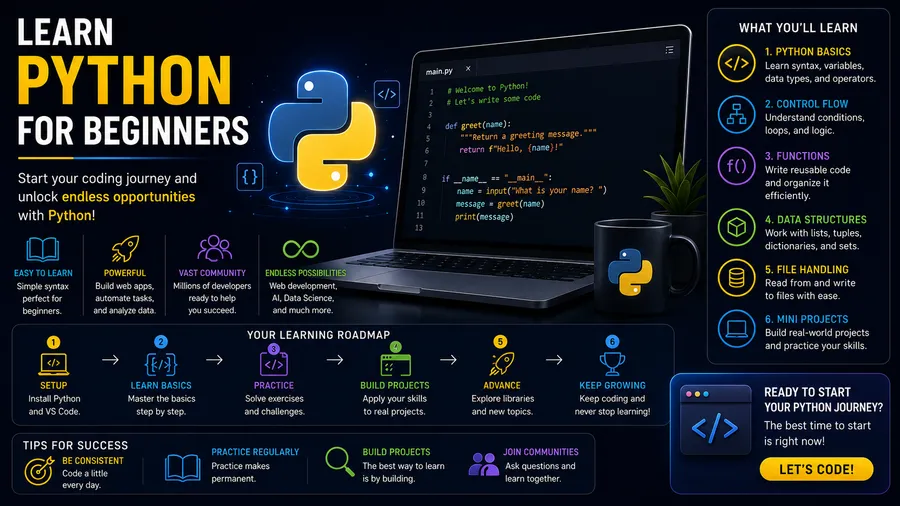
Learn Python for Beginners: A Complete Guide (2026)
Python is one of the most popular programming languages in the world. It’s known for its simple syntax, readability, and versatility, making it an excellent choice for beginners and professionals alike.
Python is used in web development, artificial intelligence, automation, cybersecurity, data science, and many other fields. In this guide, you’ll learn the fundamentals of Python and build a strong foundation for your programming journey.
What Is Python?
Python is a high-level, interpreted programming language created by Guido van Rossum and first released in 1991.
It focuses on simplicity and readability, allowing developers to write clean and efficient code.
Python runs on Windows, macOS, Linux, and many other platforms.
Why Learn Python?
Python is popular because it is:
- Easy to learn
- Beginner-friendly
- Powerful
- Cross-platform
- Open source
- Highly versatile
Python is widely used by startups, large technology companies, universities, and research organizations.
What Can You Build with Python?
Python can be used to create:
- Websites
- AI applications
- Machine learning models
- Automation scripts
- Desktop applications
- Games
- APIs
- Data analysis tools
- Cybersecurity utilities
Its flexibility makes it one of the best programming languages to learn.
Installing Python
To begin programming, install Python from the official website and verify the installation.
Check the installed version:
python --versionor
python3 --versionYou can write Python code using editors such as Visual Studio Code or PyCharm.
Your First Python Program
A simple Python program looks like this:
print("Hello, World!")Running this code displays:
Hello, World!This is traditionally the first program beginners write.
Variables
Variables store data.
Example:
name = "Hamza"
age = 22
Python automatically determines the data type, so you don’t need to declare it manually.
Data Types
Python includes several built-in data types.
Examples:
text = "Hello"
number = 100
price = 19.99
is_online = True
Common data types include:
- String
- Integer
- Float
- Boolean
- List
- Tuple
- Dictionary
- Set
Understanding data types is essential for writing reliable programs.
User Input
Python can receive input from users.
Example:
name = input("Enter your name: ")

print("Hello", name)
This allows programs to interact with users.
Conditional Statements
Conditions help programs make decisions.
Example:
age = 20

if age >= 18:
    print("Adult")
else:
    print("Minor")
Python uses indentation instead of braces to define code blocks.
Loops
Loops repeat code automatically.
For loop:
for i in range(5):
    print(i)
While loop:
count = 1

while count <= 5:
    print(count)
    count += 1
Loops help automate repetitive tasks.
Functions
Functions organize reusable code.
Example:
def greet(name):
    return f"Hello {name}"

print(greet("Hamza"))
Functions improve readability and reduce duplicate code.
Lists
Lists store multiple values.
Example:
fruits = ["Apple", "Banana", "Orange"]Access an item:
print(fruits[0])Lists are one of Python’s most commonly used data structures.
Dictionaries
Dictionaries store information as key-value pairs.
Example:
person = {
    "name": "Hamza",
    "age": 22,
    "country": "Morocco"
}

print(person["name"])
Dictionaries are ideal for organizing related information.
Classes and Objects
Python supports Object-Oriented Programming (OOP).
Example:
class Person:

    def __init__(self, name):
        self.name = name

    def greet(self):
        print("Hello", self.name)

user = Person("Hamza")
user.greet()
OOP helps organize larger applications.
Python Libraries
One of Python’s biggest strengths is its extensive ecosystem of libraries.
Popular libraries include:
- NumPy
- Pandas
- Matplotlib
- Flask
- Django
- TensorFlow
- PyTorch
- Requests
These libraries make complex tasks much easier.
Python Best Practices
Follow these recommendations:
- Use meaningful variable names.
- Keep functions small and focused.
- Write readable code.
- Follow PEP 8 style guidelines.
- Add comments only when necessary.
- Test your programs regularly.
Writing clean code makes projects easier to maintain.
Common Beginner Mistakes
Avoid these common mistakes:
- Incorrect indentation
- Using unclear variable names
- Ignoring error messages
- Writing very long functions
- Copying code without understanding it
- Forgetting to test programs
Learning from mistakes is part of becoming a better programmer.
What Should You Learn Next?
After mastering Python fundamentals, consider learning:
- Git & GitHub
- Object-Oriented Programming
- File Handling
- APIs
- Flask
- Django
- Data Science
- Machine Learning
- Artificial Intelligence
These topics build on your Python knowledge.
Frequently Asked Questions
Is Python good for beginners?
Yes. Python’s simple syntax and readability make it one of the easiest programming languages for beginners.
What can I build with Python?
Python can be used to build websites, automation scripts, AI applications, desktop software, games, APIs, and data analysis tools.
Do I need a powerful computer to learn Python?
No. Python runs well on most modern computers and has modest system requirements.
Is Python still worth learning in 2026?
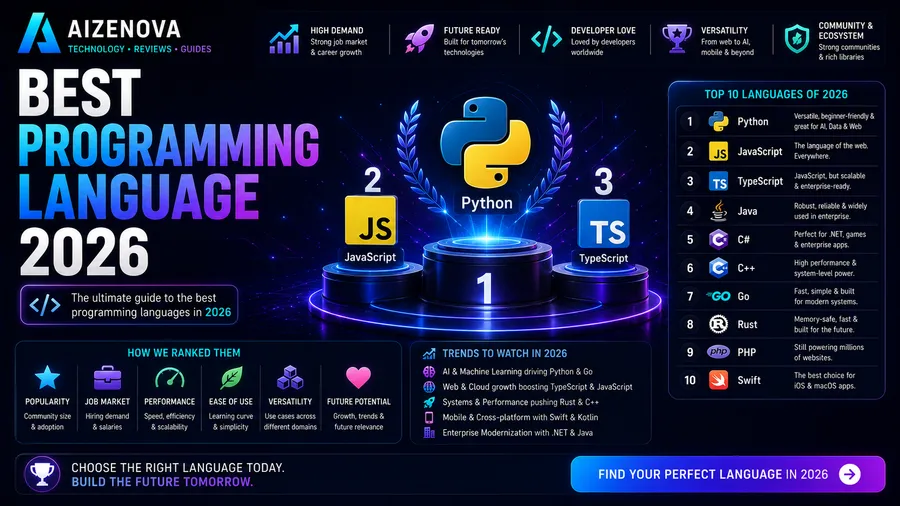
Absolutely. Python remains one of the most widely used programming languages in software development, artificial intelligence, automation, and data science.
How long does it take to learn Python?
Most beginners can learn the fundamentals within a few weeks of regular practice. Becoming proficient typically requires building projects and gaining practical experience over time.
Conclusion
Python is one of the best programming languages for beginners because it combines simplicity with powerful capabilities. Whether your goal is web development, automation, artificial intelligence, cybersecurity, or data science, Python provides an excellent foundation.
By mastering variables, functions, loops, data structures, and object-oriented programming, you’ll be well prepared to build real-world applications and continue growing as a software developer.