· Hamza · Business · 4 min read
How to Start a Blog: A Complete Beginner's Guide (2026)
Learn how to start a successful blog from scratch, choose a niche, set up your website, write SEO-friendly content, and earn money online.
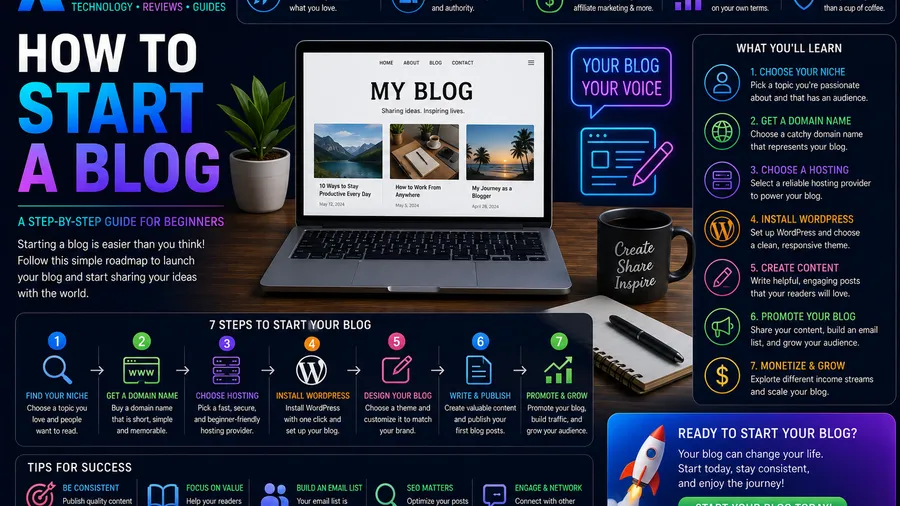
How to Start a Blog: A Complete Beginner’s Guide (2026)
Starting a blog is one of the best ways to build an online presence, share your knowledge, and even create a long-term source of income. Whether you want to write about technology, travel, business, AI, or personal finance, blogging remains one of the most effective online business models.
In this guide, you’ll learn how to start a professional blog, attract visitors through SEO, and monetize your content.
Why Start a Blog?
A blog can help you:
- Share your knowledge
- Build a personal brand
- Generate passive income
- Grow a business
- Improve writing skills
- Attract clients
- Learn SEO
- Create long-term online assets
Many successful bloggers earn income through advertising, affiliate marketing, and digital products.
Step 1: Choose a Niche
Your niche is the main topic of your blog.
Popular blogging niches include:
- Artificial Intelligence
- Technology
- Programming
- Business
- Digital Marketing
- Finance
- Health
- Fitness
- Travel
- Education
Choose a niche you’re interested in and that has long-term demand.
Step 2: Choose a Domain Name
Your domain name should be:
- Short
- Easy to remember
- Easy to spell
- Relevant to your niche
- Brandable
For example:
- aizenova.com
- techguide.com
- smartaiblog.com
Avoid using numbers or unnecessary hyphens.
Step 3: Buy Web Hosting
A hosting provider stores your website and makes it accessible online.
Look for hosting that offers:
- Fast performance
- Strong security
- Daily backups
- SSL certificates
- Good customer support
- High uptime
Reliable hosting improves both user experience and SEO.
Step 4: Install a Blogging Platform
Many beginners use content management systems (CMS) to create blogs.
Popular options include:
- WordPress
- Astro
- Next.js
- Ghost
- Hugo
Choose the platform that best fits your technical skills and goals.
Step 5: Design Your Website
Your website should be:
- Fast
- Mobile-friendly
- Easy to navigate
- Clean and modern
- Accessible
A professional design helps build trust with visitors.
Step 6: Publish High-Quality Content
Content is the foundation of every successful blog.
Focus on writing:
- Tutorials
- Buying guides
- Product reviews
- Comparisons
- News articles
- Beginner guides
Always create original content that provides real value.
Step 7: Learn SEO
Search Engine Optimization (SEO) helps your blog rank higher on search engines.
Basic SEO practices include:
- Research keywords
- Write descriptive titles
- Use headings properly
- Optimize images
- Add internal links
- Improve page speed
- Write useful content
SEO is one of the best long-term traffic sources.
Step 8: Publish Consistently
Consistency matters more than perfection.
A realistic publishing schedule might be:
- One article per week
- Two articles per week
- Three articles per week
The more high-quality content you publish, the greater your chances of attracting organic traffic.
Step 9: Promote Your Blog
Don’t rely only on search engines.
Promote your articles through:
- Social media
- Email newsletters
- Online communities
- Guest blogging
- Forums
Promotion helps your content reach a wider audience.
Step 10: Monetize Your Blog
Once your blog starts receiving traffic, you can earn money through:
- Google AdSense
- Affiliate marketing
- Sponsored posts
- Digital products
- Online courses
- Consulting
- Memberships
Many bloggers combine several income streams.
Blogging Mistakes to Avoid
Avoid these common mistakes:
- Copying content
- Ignoring SEO
- Publishing inconsistently
- Choosing a niche only for money
- Using slow hosting
- Giving up too early
Successful blogs are built over time through consistency and quality.
Tools Every Blogger Should Use
Helpful blogging tools include:
- Google Search Console
- Google Analytics
- Grammarly
- Canva
- ChatGPT
- Keyword research tools
- Image optimization tools
These tools improve both productivity and website performance.
Frequently Asked Questions
Can I start a blog for free?
Yes. Free blogging platforms exist, but using your own domain name and hosting gives you more control and looks more professional.
How many articles should I publish?
Aim to publish at least 20–30 high-quality articles before focusing heavily on monetization.
How long does it take to get traffic?
Results vary, but many blogs begin receiving consistent search engine traffic after several months of publishing quality, SEO-optimized content.
Can blogging become a full-time job?
Yes. Many bloggers earn full-time income through advertising, affiliate marketing, sponsorships, and selling digital products.
Is blogging still worth it in 2026?
Absolutely. As long as you create valuable, original content that solves readers’ problems, blogging remains one of the best long-term online business opportunities.
Conclusion
Starting a blog is easier than ever, but building a successful one requires patience, consistency, and a focus on helping your audience. Choose a niche you’re passionate about, publish high-quality content regularly, learn SEO, and improve your website over time.
A blog is more than just a website—it’s a long-term digital asset that can grow into a trusted brand and a reliable source of income.