· Hamza · Business · 4 min read
Google AdSense Guide: How to Earn Money from Your Website in 2026
Learn how Google AdSense works, how to get approved, optimize ad revenue, avoid common mistakes, and maximize your website earnings.
Google AdSense Guide: How to Earn Money from Your Website in 2026
Google AdSense is one of the easiest and most popular ways to monetize a website. Millions of publishers around the world use it to earn money by displaying relevant advertisements on their content.
Whether you run a blog, news website, or online magazine, AdSense can generate passive income as your traffic grows.
In this guide, you’ll learn how Google AdSense works, how to get approved, optimize your earnings, and avoid common mistakes.
What Is Google AdSense?
Google AdSense is an advertising program that allows website owners to earn money by displaying ads provided by Google.
When visitors view or interact with ads on your website, you receive a share of the advertising revenue.
AdSense automatically matches advertisements to your website’s content and audience.
How Google AdSense Works
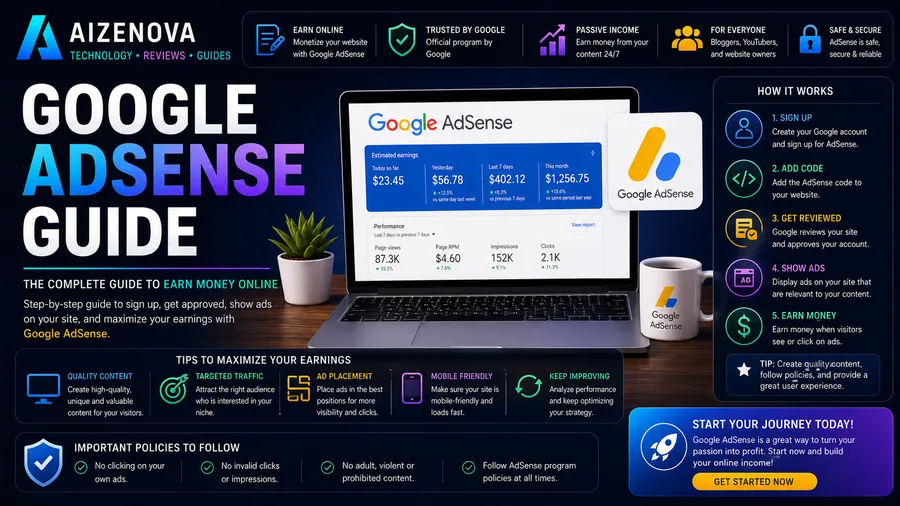
The process is simple:
- Create a website with valuable content.
- Apply for Google AdSense.
- Wait for Google’s approval.
- Place AdSense code on your website.
- Google displays relevant ads.
- You earn revenue from ad impressions and clicks.
Everything is managed automatically by Google’s advertising system.
Requirements for AdSense Approval
Before applying, your website should have:
- Original content
- Clear navigation
- About page
- Contact page
- Privacy Policy
- Fast loading speed
- Mobile-friendly design
- No copyrighted or prohibited content
Quality content is one of the biggest factors in getting approved.
Types of AdSense Ads
Google offers several ad formats, including:
- Display Ads
- In-Article Ads
- Multiplex Ads
- In-Feed Ads
- Responsive Ads
Responsive ads automatically adjust to different screen sizes, making them suitable for most websites.
How Much Can You Earn?
AdSense earnings depend on several factors:
- Website traffic
- Visitor location
- Content niche
- Advertiser competition
- Click-through rate (CTR)
- Cost per click (CPC)
High-value niches such as finance, technology, software, business, and insurance often generate higher advertising revenue than general entertainment topics.
Best Niches for AdSense
Popular high-performing niches include:
- Artificial Intelligence
- Technology
- Business
- Finance
- Programming
- SEO
- Digital Marketing
- Web Hosting
- Cybersecurity
- Online Education
Publishing helpful content in these niches can improve both traffic and earnings.
SEO and AdSense
Search engine optimization (SEO) plays a major role in AdSense success.
Good SEO practices include:
- Publishing original articles
- Targeting relevant keywords
- Improving page speed
- Optimizing images
- Using internal links
- Writing helpful content that satisfies search intent
More organic traffic generally means more opportunities to generate ad revenue.
Tips to Increase AdSense Revenue
Improve your results by:
- Publishing high-quality articles consistently.
- Focusing on evergreen topics.
- Optimizing your website for mobile devices.
- Improving page loading speed.
- Creating content around high-value keywords.
- Updating older articles regularly.
- Building backlinks naturally.
- Providing a good user experience.
Growing your traffic is usually the most effective way to increase earnings.
Common Reasons for AdSense Rejection
Applications may be rejected for reasons such as:
- Thin or low-quality content
- Duplicate content
- Poor website navigation
- Missing legal pages
- Insufficient original articles
- Copyright violations
- Policy violations
Fixing these issues before applying improves your chances of approval.
Common Mistakes to Avoid
Avoid these practices:
- Clicking your own ads
- Asking others to click ads
- Copying content from other websites
- Publishing AI-generated content without editing or adding value
- Using misleading headlines
- Placing too many ads on a page
Violating AdSense policies can result in account suspension or termination.
Best Practices
To build a successful AdSense website:
- Focus on helping your audience.
- Publish content consistently.
- Improve SEO over time.
- Keep your website fast and responsive.
- Follow Google’s advertising policies.
- Analyze performance and optimize your content.
Patience and consistency are essential for long-term success.
Frequently Asked Questions
Is Google AdSense free?
Yes. Joining Google AdSense is free. You only need a website that meets Google’s eligibility requirements.
How many articles do I need before applying?
There is no official minimum. However, many publishers wait until they have around 20–30 high-quality, original articles before applying.
Can beginners use AdSense?
Yes. Many successful bloggers start with AdSense as their first monetization method.
Does AdSense pay for clicks or views?
AdSense earnings can come from both ad impressions and clicks, depending on the type of advertisement and advertiser demand.
Is Google AdSense still worth it?
Yes. AdSense remains one of the easiest and most reliable ways for website owners to generate passive income, especially when combined with strong SEO and consistent content publishing.
Conclusion
Google AdSense is an excellent monetization option for bloggers, publishers, and content creators who want to earn revenue from their websites. While approval requires patience and quality content, the long-term rewards can be significant.
The key to success is simple: create valuable content, optimize your website for search engines, follow Google’s policies, and continue growing your audience. As your traffic increases, your AdSense earnings have the potential to grow alongside it.